
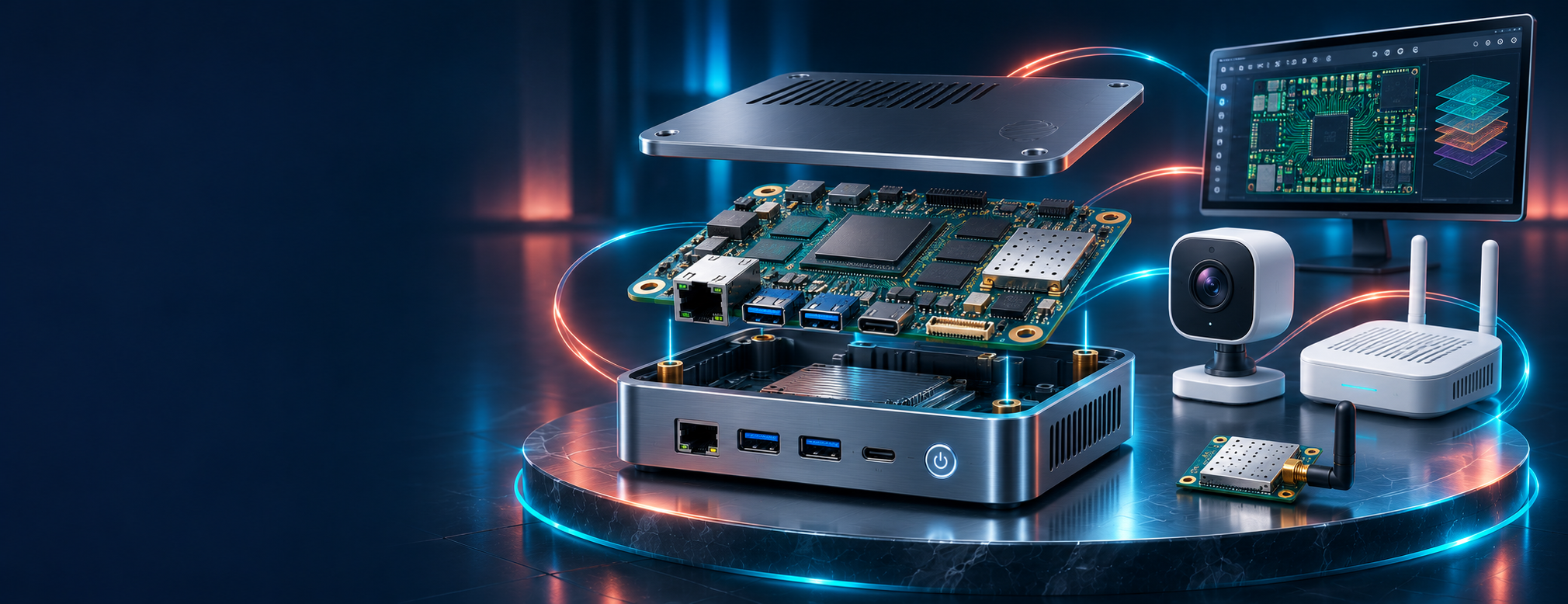



Embedded software architecture
Separate functions, states, and interfaces between components; clarify resource limits and hardware dependencies.
Translate product requirements into software components, states and interfaces suited to the target hardware platform and resources.
Devices need to receive data, process it, and communicate under specific resource, connectivity, and power conditions. Embedded software design must accompany hardware architecture and use cases to form a system that can be tested and maintained.
Separate functions, states, and interfaces between components; clarify resource limits and hardware dependencies.
Develop, integrate, or adapt firmware and drivers according to target platforms, peripherals, and agreed functions.
Build interfaces between devices, sensors, applications, or data platforms according to selected protocols and hardware capabilities.
Coordinate hardware and software to test startup, communication, and device behavior; record data to support issue isolation.
Test usage states, interruption conditions, and load according to plan; verify behavior before accepting a release.
Manage configurations, versions, build documentation, and testing guidance so the receiving team can continue development and support.
Four capability groups connect architecture, functions, interfaces, and device-version maintenance.
Usage requirements become functions, states, and software–hardware interfaces. Processing, memory, power, and connectivity limits are clarified when selecting the approach.
Teams share a basis for developing and testing device behavior.
Firmware and drivers are developed or integrated alongside platform configuration. Bring-up and debugging help verify functions against hardware, identify dependencies, and confirm technical adjustments.
Each function has a concrete test procedure on the device, beyond the source code.
Data flows are designed between sensors, devices, applications and the central platform. Data structures, connection states and retry scenarios are defined around the intended use.
The team understands where data comes from and how it is handled when connectivity changes.
The test plan includes the build environment, configuration and handover documentation. Changes to functions or platforms need to be checked against defined behavior to support maintenance and upgrades.
The receiving organization has the data and guidance needed to continue supporting the product.
The connections between people, data, and work within the solution.
All parties share data structures and test criteria for the connection point.
Understand technical changes and how to verify behavior before accepting a release.
The team has the information needed to continue development and support.
Each function is linked to the target platform, exchanged data and verification conditions.
Review hardware, the operating system or runtime, peripherals, connectivity requirements and resource constraints. Agree on the functions and interfaces to develop.
Design the firmware architecture, drivers and data flows. Each interface needs appropriate exchange methods, error behavior and test criteria.
Develop within defined scopes, bring up the device and test with the hardware. Record discrepancies, logs and reproduction conditions to coordinate resolution.
Compile the source code, configuration, build instructions and agreed test steps. Prepare a process for receiving issues during operation or upgrades.
Need firmware and communication interfaces so products can exchange data with sensors, applications or management systems.
Need to process data close to devices and connect operational states to applications or a central platform.
Need to improve drivers, functions, connectivity or testing on existing hardware and software platforms.
The scope depends on hardware documentation and rights to use source code, SDKs, drivers and tools on the chosen platform. Integration depth, update mechanisms, device protection and tests are defined in the design, rather than applied identically to every product.
Platform, peripherals & connectivity requirements
Firmware, drivers & integration testing
Source code, configuration & handover instructions
Define the right scope for your organization together.
We can assess boards, SDKs, drivers and source code that the customer is authorized to provide. The scope of additional functions or improvements depends on platform access, build tools and vendor limitations.
Firmware work can be connected to applications, APIs or a central system within the same roadmap. Interfaces, access rights, data and each component's responsibilities need to be agreed before implementation.
The test plan needs to define connection loss and recovery states and how to verify data or actions after an interruption. Buffering, retry behavior, resource limits and error handling depend on the design selected for each product.

Share your software, collaboration, infrastructure, or hardware design needs. Together, define an implementation approach suited to your organization.